Tag: responsible AI

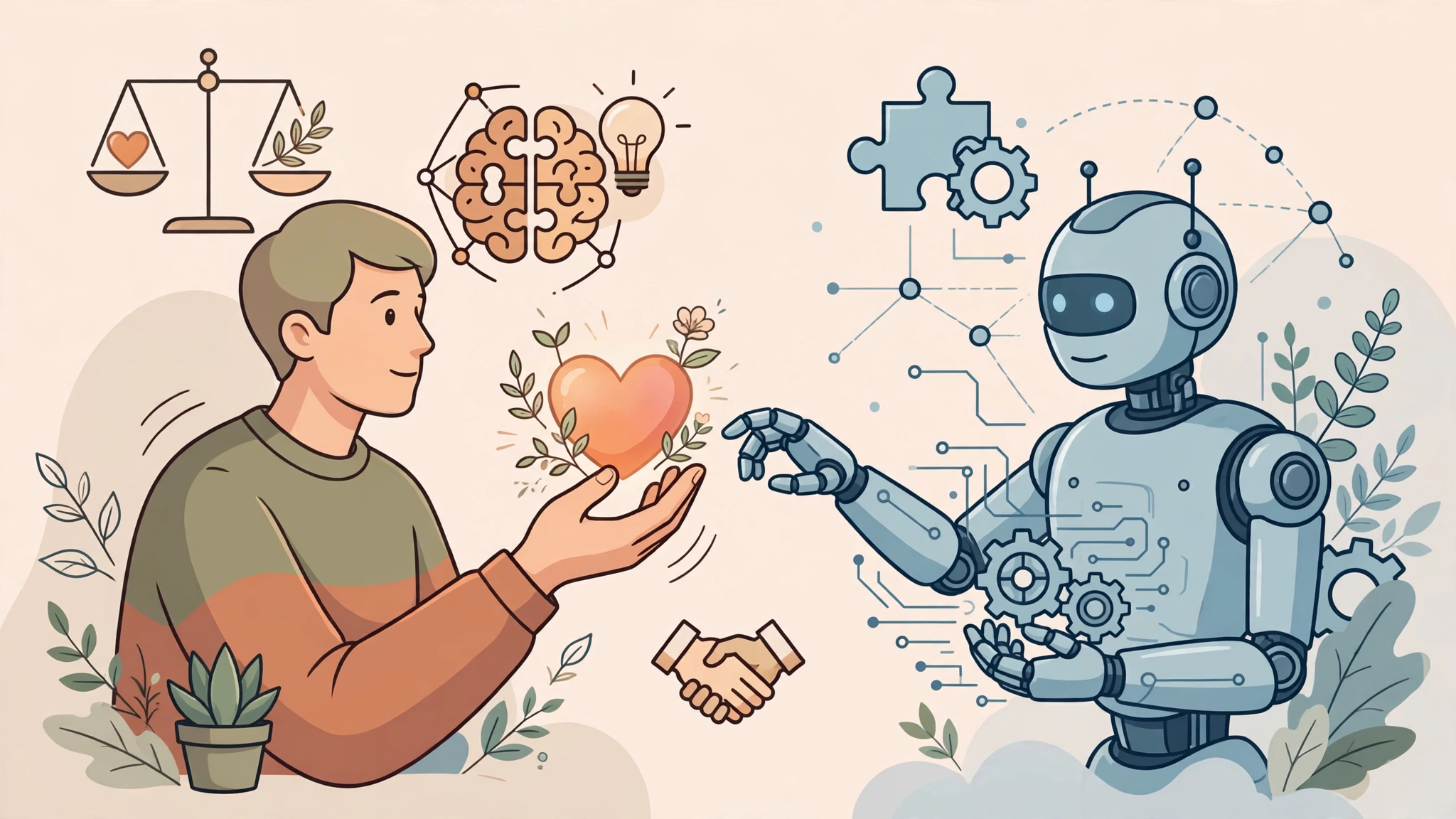
  • When You Should Not Rely on AI: 7 Tasks That Still Need Human Judgment

    When You Should Not Rely on AI: 7 Tasks That Still Need Human Judgment

    AI can summarize documents, generate ideas, analyze patterns, automate repetitive work, and help people make faster decisions.

    But faster does not always mean better.

    Some tasks involve values, accountability, relationships, uncertainty, or consequences that cannot safely be reduced to pattern recognition alone. In these situations, AI may still be useful as an assistant—but it should not become the final decision-maker.

    This guide explains when you should not rely on AI alone and highlights seven areas where meaningful human judgment should remain central.

    The Core Principle: Assistance Is Different From Authority

    The important question is not:

    “Can AI do this task?”

    A better question is:

    “Should AI have authority over the final decision?”

    An AI system may be capable of:

    • summarizing evidence;
    • identifying patterns;
    • generating options;
    • predicting likely outcomes;
    • drafting recommendations.

    But those abilities do not automatically make it appropriate to decide what should happen.

    As the stakes increase, human accountability becomes more important.

    1. Moral and Ethical Decisions

    AI can describe ethical frameworks, compare arguments, and identify competing values.

    What it cannot do is become morally responsible for the consequences of a decision.

    Why This Matters

    Ethical decisions often involve conflicts between legitimate values.

    For example:

    • privacy versus public safety;
    • individual autonomy versus collective benefit;
    • fairness versus efficiency;
    • transparency versus confidentiality;
    • short-term benefit versus long-term harm.

    There may be no mathematically correct answer.

    People must decide which values deserve priority and accept responsibility for that choice.

    AI Can Help With Ethical Deliberation

    AI can still be useful for:

    • summarizing relevant ethical frameworks;
    • identifying stakeholders;
    • surfacing potential unintended consequences;
    • generating questions for discussion;
    • comparing different interpretations.

    But the final moral judgment should remain with accountable humans.

    2. High-Stakes Legal Interpretation

    AI can search legal documents, summarize cases, organize evidence, and help draft documents.

    But legal interpretation often requires more than retrieving relevant text.

    It may involve:

    • jurisdiction;
    • binding versus persuasive authority;
    • procedural rules;
    • recent legal developments;
    • conflicting precedent;
    • strategic considerations;
    • professional responsibility.

    Why AI Alone Is Risky

    AI systems can generate incorrect citations, misstate holdings, overlook jurisdictional differences, or present an uncertain interpretation with excessive confidence.

    Even when the underlying legal text is correct, applying it to a specific situation may require professional judgment.

    A Better Role for AI

    AI may assist with:

    • case-law research;
    • document summarization;
    • issue spotting;
    • draft organization;
    • comparison of arguments.

    Final legal advice, litigation strategy, judicial decisions, or other consequential legal conclusions should remain under qualified human review.

    3. Clinical Diagnosis and Patient Care

    AI can be valuable in healthcare.

    It can help analyze images, organize patient information, summarize records, identify patterns, and support clinical workflows.

    But medical care involves more than pattern recognition.

    Patients Are More Than Data Points

    A clinician may need to consider:

    • symptoms;
    • medical history;
    • medications;
    • physical examination;
    • family context;
    • patient preferences;
    • quality-of-life priorities;
    • uncertainty that cannot be resolved immediately.

    Some of this information may never appear in structured data.

    AI Can Support, But Should Not Replace, Clinical Judgment

    Appropriate uses may include:

    • summarizing medical literature;
    • organizing patient records;
    • highlighting possible differential diagnoses;
    • assisting with administrative tasks;
    • supporting narrow validated diagnostic workflows.

    But diagnosis, treatment decisions, informed consent, and other high-impact clinical decisions should involve qualified healthcare professionals.

    4. Crisis Intervention

    Crisis situations require a particularly high level of caution.

    Examples include:

    • suicidal thoughts;
    • immediate risk of self-harm;
    • domestic violence;
    • acute psychiatric crisis;
    • medical emergency;
    • threats of violence.

    Why Human Judgment Matters

    Crisis response may require a person to:

    • recognize rapidly changing risk;
    • ask follow-up questions;
    • interpret incomplete information;
    • understand local emergency resources;
    • make decisions about escalation;
    • remain accountable for those decisions.

    An AI system can provide general supportive information, but it should not be treated as an autonomous replacement for emergency services, qualified clinicians, crisis professionals, or trusted human support.

    AI Should Know When to Escalate

    In well-designed systems, one of AI’s most important functions may be recognizing when the situation exceeds its appropriate role.

    A responsible system should help route a person toward appropriate human support instead of pretending that conversational fluency is equivalent to crisis expertise.

    5. Leadership and High-Impact People Decisions

    AI can help leaders analyze information, model scenarios, summarize employee feedback, and prepare communication.

    But leadership involves responsibility for people—not only optimization.

    Some Decisions Require Human Accountability

    Examples include:

    • layoffs;
    • promotion decisions;
    • disciplinary actions;
    • conflict resolution;
    • organizational restructuring;
    • culture-changing decisions.

    These decisions affect livelihoods, careers, relationships, and trust.

    A statistical recommendation may provide useful information, but it should not replace contextual understanding or accountable leadership.

    AI Can Inform Leadership Without Becoming the Leader

    Useful applications include:

    • scenario analysis;
    • meeting summaries;
    • draft communication;
    • trend analysis;
    • identifying questions leaders should investigate.

    But human leaders should remain responsible for interpreting that information and deciding what the organization will stand for.

    6. Creative Authorship and Personal Expression

    This category requires a little nuance.

    AI absolutely can help people create.

    It can:

    • brainstorm ideas;
    • generate drafts;
    • suggest visual concepts;
    • help overcome creative blocks;
    • explore variations;
    • assist with editing.

    But creative assistance is different from human authorship.

    Why Human Direction Still Matters

    Meaningful creative work often reflects:

    • personal experience;
    • cultural context;
    • memory;
    • intent;
    • taste;
    • values;
    • deliberate stylistic choices.

    AI can generate material that resembles these qualities, but the human creator remains responsible for deciding what the work means, what should remain, and what should be removed.

    Copyright and Attribution Add Another Layer

    AI-generated content also creates questions about authorship, licensing, attribution, training data, and copyright.

    Those rules continue to evolve across jurisdictions.

    If AI materially contributes to published creative work, creators should understand the applicable platform rules, licensing terms, and current legal guidance.

    7. Diplomacy, Mediation, and Deep Human Negotiation

    Negotiation is not simply an optimization problem.

    People may care about:

    • status;
    • historical grievances;
    • trust;
    • symbolism;
    • cultural expectations;
    • relationships;
    • future cooperation.

    Some agreements depend on language that is intentionally flexible or sensitive to context.

    Where AI Can Help

    AI may assist negotiators by:

    • summarizing positions;
    • translating documents;
    • comparing proposals;
    • mapping areas of agreement;
    • identifying unresolved issues;
    • preparing background research.

    Where Human Judgment Remains Essential

    Final negotiation may require interpreting:

    • tone;
    • trust;
    • intent;
    • relationship history;
    • cultural meaning;
    • political consequences.

    Those judgments should remain with people who understand the parties and can be held responsible for the outcome.

    A Better Framework: Ask What AI Should Be Allowed to Do

    Instead of deciding whether AI should be completely used or completely banned, divide the task into levels.

    Level AI Role Human Role
    1. Inform Retrieve and summarize information Review the information
    2. Recommend Generate possible options Choose among them
    3. Prepare Draft an action Approve or reject it
    4. Execute Perform an approved action Monitor and remain accountable
    5. Decide Make the final consequential judgment Minimal involvement

    For high-stakes human-centered tasks, the safest boundary is often to keep AI in Levels 1–3 rather than giving it final decision authority.

    Three Questions to Ask Before Delegating a Decision to AI

    Before allowing AI to make or execute an important decision, ask:

    1. Can the Decision Be Reversed?

    Generating a bad draft can be corrected.

    Denying medical treatment, terminating an employee, or making a legal filing may be much harder to reverse.

    2. Who Is Accountable If the AI Is Wrong?

    If nobody can clearly answer this question, the system probably has too much autonomy.

    3. Does the Decision Require Values or Context That Cannot Be Fully Encoded?

    If the answer depends on fairness, dignity, trust, culture, consent, or other contested human values, human judgment should remain central.

    Warning Signs That You Are Delegating Too Much to AI

    • Employees are told to follow the AI recommendation unless they can prove it is wrong.
    • No human can explain why a consequential decision was made.
    • AI output is treated as objective simply because it contains numbers.
    • Users cannot appeal an AI-assisted decision.
    • The system operates outside its original intended context.
    • Human reviewers become rubber stamps rather than genuine decision-makers.
    • People affected by the decision do not know AI was involved.

    These are governance problems, not merely model-quality problems.

    When AI Is Still Extremely Useful

    Keeping humans responsible does not mean rejecting AI.

    AI is particularly useful when it:

    • reduces repetitive administrative work;
    • organizes large amounts of information;
    • helps people consider alternatives;
    • drafts material for human review;
    • finds patterns that deserve further investigation;
    • helps experts work faster without removing their authority.

    The strongest systems often combine machine scale with human accountability.

    A Human-Judgment Checklist

    Before using AI for an important decision, ask:

    • What happens if this decision is wrong?
    • Can the outcome be reversed?
    • Does the task involve health, rights, safety, employment, money, or legal consequences?
    • Does the decision require empathy, cultural context, or moral judgment?
    • Is an appropriately qualified person reviewing the result?
    • Can that person disagree with the AI?
    • Is there an appeal or escalation path?
    • Can we explain how the final decision was reached?
    • Is AI being used because it genuinely helps—or simply because automation is available?

    How This Guide Was Prepared

    This guide distinguishes between tasks where AI can provide useful assistance and tasks where final authority should remain with accountable humans.

    The recommendations focus on consequence, reversibility, accountability, human values, professional expertise, and the difference between generating information and making consequential decisions.

    AI capabilities, laws, professional standards, and organizational policies continue to evolve. Specific medical, legal, employment, security, or regulatory uses should therefore be evaluated against current authoritative guidance for the relevant jurisdiction and profession.

    Frequently Asked Questions

    Should AI never be used for ethical decisions?

    AI can help organize arguments, identify stakeholders, and explore possible consequences.

    It should not be treated as the morally accountable authority responsible for the final decision.

    Can AI be used in medicine?

    Yes.

    AI already has useful applications in healthcare, including narrow diagnostic tasks, information processing, documentation, and workflow support.

    The important distinction is between assisting qualified professionals and replacing accountable clinical judgment in consequential decisions.

    Can AI be used for legal work?

    Yes.

    AI can assist with research, summarization, drafting, document review, and information retrieval.

    But lawyers and other qualified professionals remain responsible for verifying legal authorities, complying with professional obligations, and making consequential legal judgments.

    Does AI lack creativity?

    AI can generate novel-looking text, images, audio, and other creative material.

    The more useful distinction is that AI does not have a human biography, personal intentions, lived experience, or cultural stake in the work it generates.

    Human creative direction therefore remains important when meaning, authorship, attribution, or personal expression matters.

    Can AI replace managers or leaders?

    AI can automate parts of management and help leaders analyze information.

    But decisions affecting people, culture, trust, accountability, and organizational values should not be delegated entirely to an AI system.

    What is the easiest rule for deciding whether AI should make a decision?

    Ask:

    If this goes wrong, would a responsible human need to explain, defend, or repair the outcome?

    If the answer is yes, that human should probably remain meaningfully involved before the decision is finalized.

    Final Takeaway

    The question is not whether AI is powerful enough to participate in important work.

    It already can.

    The harder question is where its authority should stop.

    AI is excellent at scale, speed, information processing, and generating options.

    Humans remain essential when decisions require:

    • accountability;
    • ethical judgment;
    • professional responsibility;
    • empathy;
    • cultural context;
    • relationship awareness;
    • acceptance of consequences.

    The most responsible future is therefore not “human versus AI.”

    It is choosing carefully which parts of a task should be automated—and making sure the person responsible for the outcome never disappears from the process.

  • How to Use AI for Research Without Spreading Misinformation

    How to Use AI for Research Without Spreading Misinformation

    AI can make research faster. It can help you summarize documents, organize notes, generate search terms, compare arguments, and identify questions worth investigating.

    But speed creates a new problem: an AI-generated answer can sound convincing even when a citation is wrong, a source does not exist, a study has been misinterpreted, or important context is missing.

    That means responsible AI-assisted research requires a different mindset. Instead of treating AI as an authority, treat it as a research assistant whose work must be checked.

    This guide explains how to use AI for research without spreading misinformation, with a practical workflow for source verification, citation checking, research synthesis, transparency, and human review.

    What AI Is Good at in Research—and What It Is Not

    AI can be genuinely useful during research, but different tasks involve different levels of risk.

    Good Uses of AI

    AI can help with tasks such as:

    • brainstorming search queries;
    • explaining unfamiliar terminology;
    • organizing research notes;
    • summarizing documents you provide;
    • comparing arguments across several supplied sources;
    • creating preliminary research outlines;
    • identifying possible gaps or questions for further investigation;
    • reformatting information you have already verified.

    Higher-Risk Uses of AI

    More caution is required when asking AI to:

    • produce citations from memory;
    • state exact statistics;
    • interpret medical evidence;
    • explain legal requirements;
    • describe recent events;
    • determine scientific consensus;
    • identify the “best” study without a defined methodology;
    • make claims about people, organizations, or contested topics.

    The more important the claim, the more important independent verification becomes.

    1. Understand Why AI Can Produce Misinformation

    Large language models generate responses by predicting patterns in language. They are very good at producing coherent explanations, but coherence and factual accuracy are not the same thing.

    An AI response can therefore contain:

    • a completely fabricated citation;
    • a real paper with the wrong author or date;
    • a real source that does not support the stated conclusion;
    • an outdated statistic;
    • a correct fact placed in the wrong context;
    • an oversimplified explanation of a contested issue;
    • missing limitations from the original research.

    This does not mean AI is useless for research. It means its output should be treated as material to investigate rather than evidence by itself.

    Fluent Writing Can Hide Weak Evidence

    One of the most important habits when researching with AI is separating presentation quality from evidence quality.

    A response may include academic language, citations, percentages, and technical terminology while still being incorrect.

    Instead of asking, “Does this sound credible?” ask:

    • Where does this information come from?
    • Can I open the original source?
    • Does the source actually support this statement?
    • Is the information still current?

    2. Separate AI Claims From Verified Evidence

    Do not copy an entire AI answer directly into your research notes and treat everything inside it as equally reliable.

    Break the response into individual claims.

    For example, an AI might say:

    “A 2024 study found that AI-assisted students completed research tasks faster and produced more accurate results.”

    That sentence contains several claims:

    • a study exists;
    • it was published in 2024;
    • it studied AI-assisted students;
    • research tasks were completed faster;
    • accuracy improved.

    Each part should be verified before the sentence is reused.

    Create a Simple Claim Status

    When researching, I recommend using three simple labels:

    • Verified: supported by a source you personally checked.
    • Partially Verified: some parts are supported, but context or details remain uncertain.
    • Unverified: the source has not been located or does not support the claim.

    This prevents AI-generated information from quietly becoming “fact” simply because it has been copied into your notes.

    3. Verify the Primary Source

    Whenever possible, trace important claims back to the original evidence.

    For academic research, that may mean the original paper.

    For government policy, it may mean legislation, regulations, official guidance, or a government publication.

    For product or software information, it may mean current official documentation or release notes.

    Do Not Stop After Finding the Citation

    A citation existing does not prove the AI used it correctly.

    Open the source and check:

    • the title;
    • authors;
    • publication date;
    • study population;
    • methodology;
    • results;
    • limitations;
    • the exact section relevant to the AI’s claim.

    A real study can still be misrepresented.

    4. Audit Every AI-Generated Citation

    References deserve special attention because fabricated citations can look surprisingly convincing.

    If AI provides a paper, report, book, or legal source, verify it independently.

    A Practical Citation Check

    1. Search for the exact title.
    2. Confirm the author names.
    3. Confirm the journal, publisher, institution, or government body.
    4. Check the publication year.
    5. Verify the DOI or other identifier when available.
    6. Open the source.
    7. Confirm that it supports the specific claim.

    If you cannot locate the source in an appropriate authoritative database or on the publisher’s website, do not cite it as verified evidence.

    Never Cite the AI Instead of the Evidence

    If AI helps you discover a useful study, cite the study itself.

    The AI is a discovery or analysis tool—not a substitute for the underlying evidence.

    5. Prefer Primary and Authoritative Sources

    Not every claim requires an academic paper.

    The best source depends on the question.

    Examples

    • Scientific research: original peer-reviewed studies, systematic reviews, and recognized research databases.
    • Health: public health authorities, clinical guidelines, systematic reviews, and original research.
    • Law: statutes, regulations, court decisions, and official government resources.
    • Software: current official documentation, repositories, release notes, and vendor advisories.
    • Statistics: the organization that collected or published the original data.
    • Company announcements: the company’s official newsroom or documentation.

    A secondary article can help you understand a topic, but important claims should be traced back when practical.

    6. Check Whether the Source Supports the Context

    A technically accurate quotation can still create misinformation when context is removed.

    Suppose an AI summarizes a study as:

    “AI improves student performance.”

    The original study might actually have examined:

    • one type of task;
    • a limited age group;
    • one educational setting;
    • a short experimental period;
    • one specific AI system.

    Turning that into a universal statement would exaggerate the evidence.

    Check the Boundaries of Every Important Claim

    Ask:

    • Who was studied?
    • Where was the research conducted?
    • When was it conducted?
    • What exactly was measured?
    • What did the researchers say they could not conclude?

    Responsible research preserves those boundaries.

    7. Ask AI to Work From Sources You Provide

    One useful way to reduce uncertainty is to give the AI the material it should analyze instead of asking it to recall sources from memory.

    For example, you might provide several papers and ask:

    Using only the documents I provided, compare how each study defines the main concept. For every conclusion, identify the source document and distinguish direct evidence from your interpretation.

    This makes the analysis easier to audit.

    Useful Source-Grounded Tasks

    When documents are provided directly, AI can help you:

    • compare methodologies;
    • identify recurring themes;
    • compare definitions;
    • extract stated limitations;
    • find disagreements between papers;
    • organize evidence into categories.

    You should still check important conclusions against the original text.

    8. Use AI to Find Contradictions, Not Just Summaries

    Summarization is useful, but one of the more interesting uses of AI is asking it to compare sources that disagree.

    If you provide several studies, ask questions such as:

    • Which conclusions conflict?
    • Do the studies define the same concept differently?
    • Are their populations comparable?
    • Do they use different measurement methods?
    • Does one study acknowledge limitations ignored by another?

    This can help you identify questions that deserve closer human analysis.

    Do not assume that AI has correctly identified every disagreement. Use its output as a map for your own reading.

    9. Ask AI to Identify Uncertainty

    Research is rarely as certain as a polished AI answer makes it appear.

    You can explicitly ask the model to separate:

    • well-supported evidence;
    • reasonable interpretation;
    • controversial claims;
    • missing evidence;
    • questions it cannot answer from the supplied sources.

    Example Prompt

    Separate your response into verified findings from the supplied sources, reasonable interpretations, and unresolved questions. Do not invent missing information. If the documents do not support a claim, say so.

    This does not guarantee accuracy, but it gives you a clearer structure to review.

    10. Do Not Rely on AI to Accurately Describe Its Own Training Data

    Asking an AI system to disclose exactly what was contained in its training data may produce an incomplete or unreliable answer unless the provider has explicitly published that information.

    The same applies to assumptions about knowledge cutoffs, regional coverage, or specific databases included in training.

    If those details matter to your research, use documentation published by the AI provider rather than relying on the model to describe itself.

    11. Protect Confidential and Sensitive Research Data

    Before uploading unpublished research, interviews, personal information, confidential documents, or proprietary datasets to an AI service, understand how that service handles data.

    Check:

    • whether prompts are retained;
    • whether content may be used to improve models;
    • available privacy controls;
    • organizational account policies;
    • data-processing terms;
    • where applicable, research ethics or legal requirements.

    Removing names does not necessarily make a dataset anonymous if individuals can still be identified from other information.

    For sensitive research, follow your institution’s policies rather than choosing a tool based only on convenience.

    12. Keep Humans Responsible for the Final Interpretation

    AI can organize and analyze information, but responsibility for the final research output should remain with the researcher.

    Human review is particularly important for:

    • conclusions;
    • causal claims;
    • interpretation of conflicting evidence;
    • high-stakes recommendations;
    • ethical judgments;
    • claims affecting individuals or communities.

    A useful principle is:

    AI can assist the research process, but it should not be the final authority on what the evidence means.

    13. Use a Human-in-the-Loop Workflow

    A practical research workflow can include human checkpoints at several stages.

    Before Using AI

    Define:

    • the research question;
    • acceptable types of evidence;
    • important terminology;
    • known limitations;
    • which decisions require expert review.

    During AI-Assisted Analysis

    Check:

    • whether sources are being represented accurately;
    • whether important context is missing;
    • whether the model is introducing unsupported claims;
    • whether contradictory evidence has been considered.

    Before Publication

    Review:

    • every citation;
    • important statistics;
    • names and dates;
    • quoted material;
    • technical terminology;
    • the final interpretation.

    14. Keep a Research Provenance Trail

    When AI plays a meaningful role in research, keep a record of how information moved from source to final output.

    Your notes might include:

    • original sources;
    • important search queries;
    • AI prompts used for substantial analysis;
    • AI-generated intermediate outputs;
    • verification notes;
    • changes made after human review.

    This makes it easier to revisit decisions and correct mistakes later.

    It is especially valuable when several people collaborate on the same research project.

    15. Disclose Meaningful AI Assistance When Appropriate

    AI disclosure requirements depend on context.

    Academic journals, universities, employers, clients, and publishers may have different policies.

    Before submitting work, check the relevant rules.

    A Simple Disclosure Could Explain

    • which AI tool was used;
    • what it was used for;
    • what humans independently verified;
    • whether AI generated or analyzed substantive research content.

    Transparency is particularly important when AI materially influenced the analysis rather than simply helping with grammar or formatting.

    16. Never Invent Personal Experience or Research Activity

    This matters when AI is also used during writing.

    Do not allow an AI-generated draft to say:

    • “In our testing…” if no test occurred;
    • “We interviewed…” if nobody was interviewed;
    • “In my experience…” when the claim is not based on your experience;
    • “Our data showed…” when no original data exists.

    Research credibility depends not only on factual accuracy but also on accurately representing how knowledge was obtained.

    17. Treat Exact Statistics as High-Risk Claims

    Percentages, sample sizes, effect sizes, dates, and rankings deserve additional verification.

    Whenever AI produces an exact number:

    1. locate the original source;
    2. find the original table, chart, or result;
    3. confirm the population and methodology;
    4. confirm that the number has not been taken out of context;
    5. check whether newer evidence exists.

    If the original evidence cannot be located, remove the number or clearly mark the claim as unverified.

    18. Watch for Citation Cascades

    Sometimes several websites repeat the same claim but ultimately rely on one weak or misquoted source.

    Seeing the same statistic on five websites does not necessarily mean five independent sources confirm it.

    Trace repeated claims backwards until you find the original evidence.

    If every article points to another article rather than the underlying research, be cautious.

    19. Use AI to Challenge Your Own Conclusions

    AI can also be useful as a structured critic.

    After drafting a conclusion, you can ask:

    Based only on the evidence I supplied, identify the strongest reasons this conclusion might be overstated. Point out missing evidence, alternative explanations, and claims that require additional sources.

    This can help reveal weaknesses before publication.

    But once again, evaluate the criticism yourself rather than automatically accepting it.

    20. Know When AI Should Not Be the Decision Maker

    Some research activities have consequences that extend beyond writing efficiency.

    Do not delegate final decisions to an AI system when decisions involve:

    • medical treatment;
    • legal rights;
    • research-participant safety;
    • employment decisions;
    • disciplinary decisions;
    • high-impact public policy;
    • other consequential judgments requiring qualified human oversight.

    AI may assist with information processing, but qualified humans should remain accountable for consequential decisions.

    A Practical AI Research Workflow

    A simple workflow might look like this:

    1. Define the question. Write down exactly what you are investigating.
    2. Find initial sources. Use databases, search engines, official repositories, or AI-assisted search.
    3. Collect the originals. Save the papers, reports, documentation, or datasets.
    4. Use AI for organization. Ask it to summarize, compare, categorize, or identify potential contradictions.
    5. Check every important claim. Return to the original evidence.
    6. Search for conflicting evidence. Do not verify only sources that agree with your initial conclusion.
    7. Write the synthesis yourself. Use AI assistance where appropriate, but keep human control over meaning and conclusions.
    8. Audit citations and statistics. Check them individually.
    9. Document meaningful AI involvement.
    10. Perform a final human review.

    AI Research Checklist Before You Publish

    Before publishing or submitting AI-assisted research, ask:

    • Have I personally opened every important cited source?
    • Does each citation actually support the associated claim?
    • Have all exact statistics been checked against original evidence?
    • Have I preserved important limitations and context?
    • Have I searched for credible contradictory evidence?
    • Did AI introduce any source I have not independently verified?
    • Are recent or time-sensitive claims still current?
    • Have I distinguished evidence from interpretation?
    • Have I protected sensitive or confidential information?
    • Have I followed relevant AI disclosure policies?
    • Is a human accountable for the final conclusion?

    If several answers are no, the research is probably not ready to publish.

    How This Guide Was Prepared

    This guide focuses on practical risk reduction rather than presenting any AI model as completely reliable or completely unsuitable for research.

    The recommendations emphasize primary-source verification, citation auditing, contextual reading, human oversight, data privacy, documentation, and transparent use of AI.

    Guidance from organizations including NIST and UNESCO also emphasizes risk management, human oversight, responsible use, and careful consideration of the limitations and implications of generative AI.

    AI systems, provider policies, model capabilities, research standards, and institutional disclosure requirements change over time. Researchers should therefore consult current documentation and policies relevant to their field before using AI in formal research.

    Frequently Asked Questions

    Can I use AI for academic research?

    Yes, depending on the rules of your institution, publisher, course, or research project.

    AI can assist with activities such as brainstorming, organization, source-grounded summarization, comparison, and editing.

    However, important factual claims and citations should be independently verified, and applicable disclosure rules should be followed.

    Can I use AI to find academic sources?

    You can use AI to suggest search terms, authors, topics, or potential sources, but you should independently confirm that every suggested reference exists.

    Where possible, search scholarly databases or the publisher’s official website.

    Can AI write my literature review?

    AI can help organize and compare literature you provide, but relying on it to independently generate an entire literature review introduces significant verification problems.

    A stronger approach is to collect and read the relevant evidence, use AI to assist with organization or comparison, and keep responsibility for synthesis and interpretation with the researcher.

    Is an AI-generated citation trustworthy if it includes a DOI?

    Not automatically.

    A DOI can be incorrect, point to a different publication, or be associated with a real paper that does not support the AI-generated claim.

    Always resolve the DOI and inspect the source itself.

    Are open-weight AI models automatically more trustworthy?

    No.

    Greater access to a model can make certain kinds of inspection, customization, or local deployment possible, but it does not automatically eliminate hallucinations, bias, or inaccurate outputs.

    Evaluate the particular model, configuration, dataset, and research task rather than assuming openness alone guarantees reliability.

    Should I ask AI to provide sources for every answer?

    You can, but source generation does not replace verification.

    For important research, it is often better to locate the evidence independently or provide source documents directly and ask the AI to work from those materials.

    What should I do if AI and the original source disagree?

    Trust the original evidence after confirming that you are reading and interpreting it correctly.

    AI output should never override a verified primary source simply because the AI explanation sounds more confident.

    Final Takeaway

    The safest way to use AI for research is not to ask, “Can I trust this AI?”

    A better question is:

    “What process will I use to verify what it gives me?”

    Use AI to accelerate discovery, organization, comparison, and critical questioning. Keep the original sources visible. Verify citations and statistics. Preserve context. Search for evidence that challenges your conclusion. Protect sensitive information. Document meaningful AI involvement. Keep humans responsible for the final interpretation.

    AI can make research faster, but trustworthy research still depends on evidence, transparency, careful judgment, and a willingness to verify before publishing.